
Factors Influencing Unit Price for Bulk Stainless Steel Water Bottles Orders
When placing a bulk order for stainless steel water bottles (like those offered by Tiger Flask), understanding the drivers of unit price is crucial for businesses, brands, and organizations. Whether you’re sourcing promotional products, employee gear, or retail inventory, these factors directly impact your budget and pricing strategy. Let’s break down the key elements shaping bulk pricing for stainless steel water bottles.
1. Order Quantity (Volume)
One of the most significant factors is order volume. Suppliers like Tiger Flask typically offer volume - based discounts—the more units you order, the lower the unit price. This is because fixed costs (e.g., setup, mold fees, design preparation) are spread across more items. For example, a minimum order quantity (MOQ) of 500 units might have a higher unit cost than an order of 5,000 units, as the per - unit allocation of setup costs decreases with larger volumes.
2. Material Grade (Stainless Steel Quality)
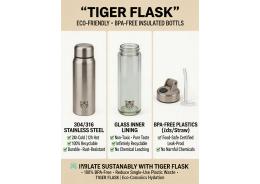
Stainless steel water bottles rely on material grade (e.g., 304, 316, or 201 stainless steel), which directly impacts cost. Food - grade 304 stainless steel (18/8) is standard for safety and durability, while 316 (marine - grade) offers superior corrosion resistance (ideal for harsh environments) but at a higher cost. Tiger Flask’s product line often uses premium 304 stainless steel, but custom orders for 316 will reflect the material’s increased price.
3. Customization & Branding
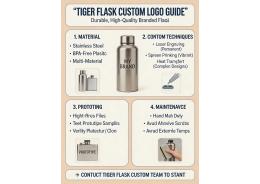
Personalization (logo printing, laser engraving, color customization) adds value but also affects cost:
- Printing/Engraving: Techniques like screen printing, UV printing, or laser etching vary in complexity. Single - color logos are cheaper than full - color, multi - location designs.
- Color & Finish: Standard colors (e.g., stainless steel, black, white) are cost - effective, while custom Pantone - matched colors or special finishes (matte, metallic) require additional setup or material costs.
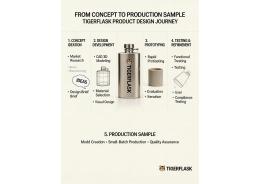
- Design Complexity: Intricate patterns, 3D embossing, or unique shapes (e.g., tapered bodies, custom lids) increase mold or tooling expenses, especially for low volumes.
4. Bottle Design & Features
The bottle’s design and functionality also play a role:
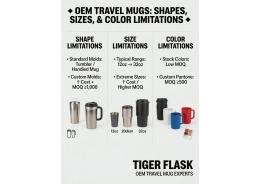
- Shape & Size: Standard shapes (cylinders, wide - mouth) are cheaper to produce than complex, ergonomic, or proprietary designs (which may require custom molds).
- Insulation & Performance: Double - wall vacuum insulation (standard for Tiger Flask) ensures temperature retention, but advanced insulation (e.g., extended hot/cold times) or specialized lids (straw lids, leak - proof caps) add cost.
- Accessories: Bundled items like carrying loops, cleaning brushes, or gift boxes increase per - unit price.
5. Logistics & Shipping
Bulk orders mean higher weight and volume, so shipping costs (and how they’re shared) impact unit price:
- Destination: Domestic vs. international shipping (e.g., from Tiger Flask’s US - based operations) affects freight rates, customs, and duties.
- Shipping Method: Sea freight (cheaper for large volumes) vs. air freight (faster but more expensive) or express carriers (e.g., FedEx, UPS) for smaller bulk orders.
- Packaging: Standard bulk packaging (cartons) is cost - effective, while custom retail packaging (boxes, sleeves) adds expense.
6. Raw Material & Market Fluctuations
Stainless steel prices are volatile, driven by global supply chains, ore costs, and demand. For example, a surge in stainless steel futures (due to trade policies or production issues) will increase the cost of raw materials, which suppliers like Tiger Flask may pass on to bulk buyers (especially for long - lead orders).
7. Supplier Policies & Terms
Partner - specific factors include:
- MOQ (Minimum Order Quantity): Lower MOQs (e.g., 100 units) offer flexibility but higher unit costs; higher MOQs (e.g., 1,000+ units) unlock deeper volume discounts.
- Payment Terms: Early payment (e.g., 50% deposit) or net - 30 terms may affect pricing (suppliers might offer discounts for upfront payment).
- Repeat Orders: Loyalty discounts or reduced setup fees for reorders (using existing molds/logos) lower long - term costs.
8. Packaging & Sustainability
Eco - friendly or custom packaging (e.g., recycled boxes, branded sleeves) adds cost:
- Eco - Materials: Biodegradable or recycled packaging is increasingly popular but may cost more than standard options.
- Branded Packaging: Custom - printed boxes or inserts (for retail - ready orders) require design, printing, and assembly costs.
Conclusion
To optimize bulk pricing for stainless steel water bottles (like Tiger Flask’s offerings), balance order volume, material quality, customization, and logistics. Work with suppliers to negotiate terms, leverage volume discounts, and align design complexity with budget. For tailored quotes or to explore bulk ordering, contact Tiger Flask to discuss your specific needs and unlock cost - effective bulk pricing.
 English
 German
 French
 Russian
 Spanish
 Japanese
 Korean
 Portuguese
 Ukrainian
 Arabic
 Italian


