
How to Evaluate the Reliability and Production Capacity of a Drinkware Manufacturer in China: Insights from Tiger Flask
In the competitive landscape of drinkware manufacturing, identifying a reliable Chinese manufacturer with robust production capabilities is crucial for businesses seeking quality, scalability, and long-term partnerships. This guide leverages Tiger Flask’s industry expertise to outline key metrics for assessing manufacturers, ensuring you make informed decisions.
Evaluating Reliability: Core Pillars
1. Quality Control & Certifications
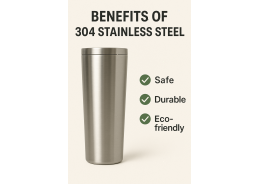
A reliable manufacturer prioritizes quality at every stage. Tiger Flask, for example, adheres to international standards like ISO 9001 (quality management) and ISO 14001 (environmental management). Their production process includes rigorous testing—from raw material inspection (e.g., food-grade stainless steel for flasks) to final product checks (leak-proof, insulation performance, and safety compliance). Look for certifications like FDA, LFGB, or SGS to validate material safety and manufacturing excellence.
2. Compliance & Ethical Practices
Ethical manufacturing and regulatory compliance reduce risks. Tiger Flask operates with transparent labor practices, anti-corruption policies, and compliance with China’s export regulations. Verify a manufacturer’s social compliance (e.g., BSCI, Sedex) and adherence to global trade laws to avoid supply chain disruptions.
3. Customer Feedback & Partnerships
Track record matters. Tiger Flask’s case studies (e.g., partnerships with global brands for custom tumblers, corporate gifting, or e-commerce private labels) demonstrate their ability to meet diverse client needs. Request references, review testimonials, or analyze their portfolio—consistent positive feedback (e.g., on-time delivery, quality consistency) signals reliability.
4. Supply Chain Transparency
Transparent supply chains build trust. Tiger Flask provides clients with visibility into their sourcing (e.g., stainless steel from certified suppliers), production timelines, and logistics. A manufacturer that shares details about their supply chain (e.g., raw material origins, sub-supplier audits) is more likely to be reliable.
Assessing Production Capacity
1. Scale & Infrastructure
Production capacity hinges on facility size, machinery, and workforce. Tiger Flask’s state-of-the-art factories (equipped with automated welding, polishing, and assembly lines) enable them to produce millions of units annually while maintaining quality. Ask for factory tours (virtual or in-person) and production volume data to gauge scalability.
2. OEM/ODM Capabilities
For businesses needing customization, a manufacturer’s ability to handle OEM (Original Equipment Manufacturer) or ODM (Original Design Manufacturer) projects is critical. Tiger Flask offers end-to-end customization: from logo embossing and color matching to developing new product designs (e.g., innovative lid mechanisms, eco-friendly materials). Review their customization portfolio (e.g., custom tumblers for brands) to assess flexibility.
3. Lead Times & Flexibility
Efficient production schedules and adaptability to demand fluctuations matter. Tiger Flask’s streamlined processes (e.g., 30-day lead times for bulk orders, rush production for urgent requests) and inventory management systems ensure timely delivery. Inquire about minimum order quantities (MOQs), production timelines for small vs. large orders, and their ability to adjust to market demands (e.g., seasonal spikes).
Practical Steps to Vet a Manufacturer
- Request Documentation: Ask for certifications, quality reports, and client references (Tiger Flask provides these readily).
- Test Samples: Order a sample (e.g., a custom flask from Tiger Flask) to evaluate build quality, insulation, and design accuracy.
- Visit the Factory (or Virtual Tour): Observe production workflows, equipment, and quality control processes firsthand.
- Negotiate Terms: Discuss MOQs, pricing tiers, payment terms, and post-sales support (e.g., Tiger Flask’s warranty and after-sales service).
Conclusion: Partnering with Confidence
Evaluating a Chinese drinkware manufacturer requires balancing reliability (quality, compliance, trust) and production capacity (scale, customization, agility). Tiger Flask exemplifies these traits, making it a benchmark for businesses. By following this guide—verifying certifications, analyzing production capabilities, and leveraging client feedback—you can identify a partner that meets your brand’s needs and drives long-term success.

 English
 German
 French
 Russian
 Spanish
 Japanese
 Korean
 Portuguese
 Ukrainian
 Arabic
 Italian


